
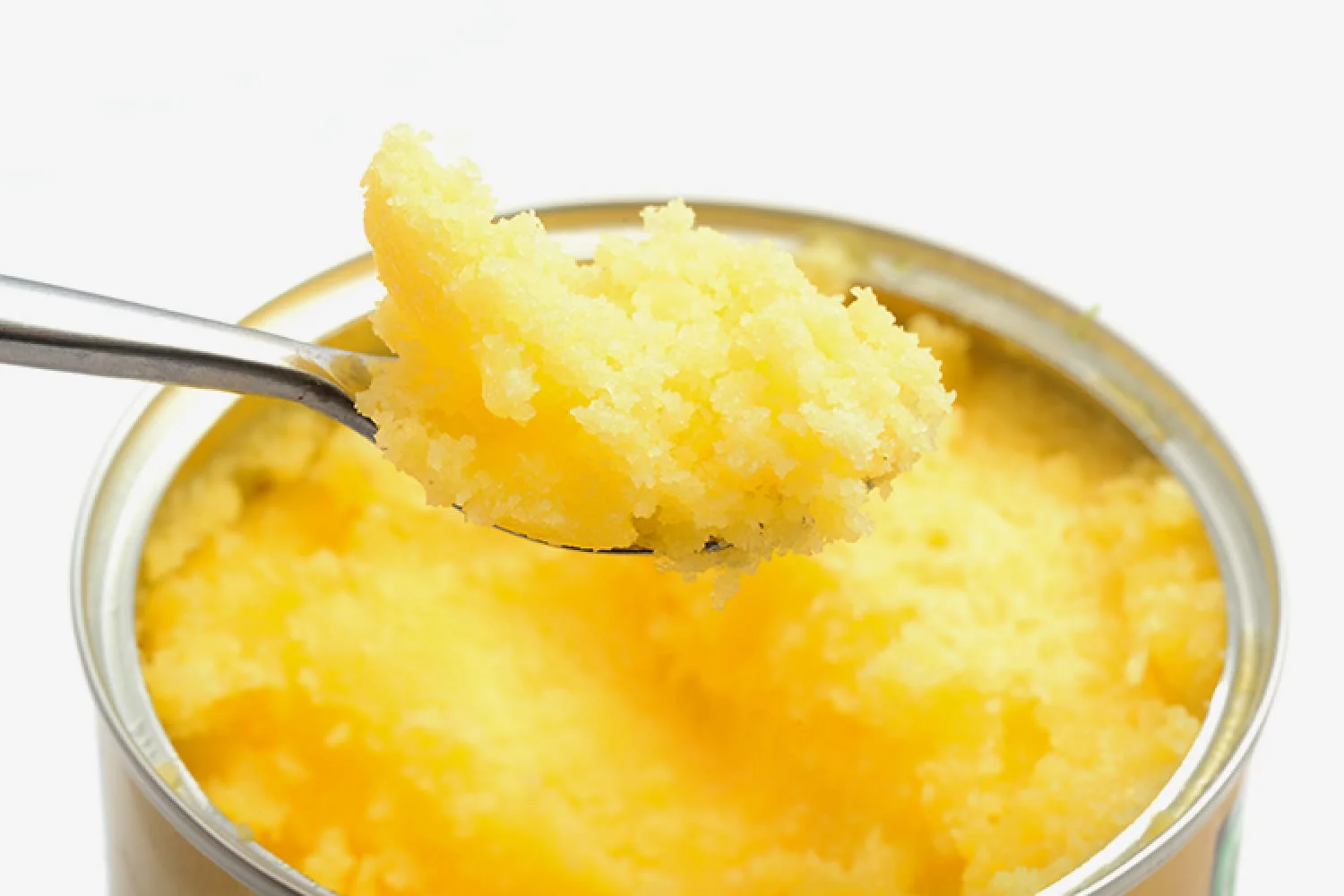
How Much Desi Ghee Per Day Is Safe?
For most healthy adults, 1 to 2 teaspoons of desi ghee per day is a safe and beneficial amount, and up to 1 tablespoon (3 teaspoons) is fine if the rest of your diet is balanced.
One tablespoon of desi ghee has roughly 120 calories and about 9 grams of saturated fat, so the real limit isn’t ghee itself, it’s how it fits your total daily fat and calories.
People with heart disease, high cholesterol, or weight concerns should stay closer to 1 teaspoon and check with a doctor first.
That’s the short answer. Below we explain where these numbers come from, how to adjust the amount for your own body and goals, and the honest truth about when ghee starts working against you.
A quick note on who’s telling you this: at Field n Feather we make pure desi cow ghee on our own farm. We’d happily sell you more. But ghee is concentrated fat, and the honest answer is that moderation gives you the benefits without the downsides, so that’s what we’ll tell you.
In This Guide
- The safe amount and where the number comes from
- Safe desi ghee per day, by your goal
- The one mistake that turns ghee unhealthy
- What you actually get from daily ghee
- Who should eat less or check first
- Frequently asked questions
Why “1–2 Teaspoons” — Where the Number Comes From
The safe amount of any fat depends on saturated fat, not just calories. Health authorities like the American Heart Association suggest keeping saturated fat to a small share of your daily calories — around 5 to 6 percent if you’re watching cholesterol, and under 10 percent for general health.
On a 2,000-calorie diet, that works out to roughly 13 to 22 grams of saturated fat for the whole day, from all sources combined.
Now look at ghee. One tablespoon holds about 9 grams of saturated fat. So a single tablespoon can use up half to two-thirds of a careful daily limit on its own — before you count the meat, dairy, or oil in the rest of your meals. That’s exactly why the sensible everyday range lands at 1 to 2 teaspoons for most people, with 1 tablespoon as a reasonable ceiling on an active day.
Does the type of ghee change the safe amount?
Not really — the saturated fat is similar across genuine ghee. What changes is quality. Real cow ghee gives you the fat-soluble vitamins and clean fats; adulterated ghee cut with palm oil gives you the calories without the goodness. If you’re not sure which you have, here’s how to check if your desi ghee is pure at home. It’s also worth knowing the difference between cow ghee and buffalo ghee, since they aren’t nutritionally identical.
Safe Desi Ghee Per Day, By Your Goal
The right amount isn’t one number for everyone. Match it to your body and what you’re trying to do.
| Who you are | Safe daily desi ghee | Why |
|---|---|---|
| Sedentary adult | About 1 teaspoon | Lower calorie needs; fat adds up fast |
| Moderately active adult | 1–2 teaspoons | Fits most balanced diets comfortably |
| Very active / athlete | Up to 1 tablespoon | Higher calorie budget absorbs the fat |
| Trying to gain weight | 1 tablespoon, with meals | Easy, clean calories — but as a swap |
| High cholesterol or heart disease | ~1 teaspoon, ask a doctor | Saturated fat can raise LDL in some people |
| Pregnant or breastfeeding | 1 teaspoon, ask a doctor | Useful energy, but personalise the amount |
These are starting points for healthy people, not medical advice. If you have a condition that affects how your body handles fat, your doctor’s number beats any number on a blog.
The One Mistake That Turns Ghee Unhealthy
Here’s the single most useful thing in this article: use ghee as a swap, not an add-on.
Ghee on its own rarely causes problems. The harm shows up when people pour ghee on top of a diet that already has plenty of fat — a ladle melting over a paratha that was already fried in oil, a spoon stirred into chai, then more in the daal.
If you replace the oil you were already cooking with, your fat intake stays roughly the same and you simply upgrade the quality. If you add ghee on top of everything else, three extra tablespoons a day is around 360 extra calories — enough to add weight over a few weeks without you noticing.
Measure it, too. A tablespoon looks tiny in a hot kadhai and far bigger on a spoon. Eyeballing is how “two teaspoons” quietly becomes four.
What You Actually Get From Sensible Daily Ghee?
Used in the right amount, desi cow ghee earns its place. It carries the fat-soluble vitamins A, D, E, and K, which your body absorbs better alongside fat. It contains butyric acid, a short-chain fatty acid linked to gut-lining health.
And it has a high smoke point — around 250°C — which makes it more stable than refined oil for the high-heat frying common in Pakistani cooking.
What it won’t do is work as a “superfood” you can eat by the ladle. The vitamin amounts per teaspoon are modest, so the value is in quality and stability, not in eating more. More ghee does not mean more benefit — it mostly means more saturated fat.
Who Should Eat Less (or Check First)
Ghee is food, not medicine, and a few groups should be cautious:
- Heart disease or high LDL cholesterol — saturated fat can raise LDL in people who are sensitive to it. Keep it minimal and speak to your doctor.
- Trying to lose weight — ghee is calorie-dense; keep it as a measured cooking-fat swap, not an extra.
- Gallbladder problems or gallstones — large amounts of fat in one sitting can trigger discomfort.
- Anyone tracking calories closely — count the tablespoon; it’s about 120 calories of pure fat.
If you’re unsure where you fit, one teaspoon a day is a safe default for almost everyone while you ask a professional. Feeding a young child is a separate question with its own rules.
Frequently Asked Questions
How much desi ghee per day is safe for a healthy adult?
Most healthy adults can safely have 1 to 2 teaspoons of desi ghee daily, and up to 1 tablespoon if their overall diet is balanced and they are active. The key is fitting it within your total daily saturated fat, not eating ghee on top of an already fatty diet.
Is 1 tablespoon of desi ghee a day too much?
For an active adult with a balanced diet, 1 tablespoon a day is usually fine. One tablespoon is about 120 calories and 9 grams of saturated fat, so for sedentary people or anyone watching cholesterol or weight, 1 to 2 teaspoons is the safer amount.
How many calories are in desi ghee?
One tablespoon of desi ghee contains roughly 120 to 130 calories, almost entirely from fat, with about 9 grams of saturated fat. It has no carbohydrates, sugar, or protein, which makes it a concentrated energy source you should measure rather than eyeball.
Can I eat desi ghee every day?
Yes. Eaten daily in moderation — 1 to 2 teaspoons for most people — desi ghee fits comfortably into a balanced diet. Problems come from habitual excess, not from daily use itself. Use it to replace other cooking fats rather than adding it on top of them.
Is desi ghee good for weight gain?
It can help, because it is calorie-dense and easy to add to meals. Around 1 tablespoon a day, alongside enough protein and overall calories, supports healthy weight gain. Adding it without changing the rest of your diet is the most reliable approach.
Does desi ghee raise cholesterol?
In many healthy adults, moderate amounts do not reliably harm cholesterol. But saturated fat can raise LDL cholesterol in people who are sensitive to it, especially those with existing heart conditions or very high baseline cholesterol, who should limit ghee and consult a doctor.
The Bottom Line
So, how much desi ghee per day is safe? For most healthy adults, 1 to 2 teaspoons daily — up to a tablespoon if you’re active — used as a swap for other cooking fats rather than an extra. Measure it, fit it into your total saturated fat for the day, and eat less if you have heart, cholesterol, or weight concerns.
Quality matters as much as quantity. If you’re going to use ghee daily, make it real ghee — our pure desi cow ghee is hand-churned from our own grass-fed cows, so the small amount you eat is genuinely worth it. You can also explore the rest of our farm and products if you’re new here.
Written by the Field n Feather farm team. This article is general information, not medical advice — please consult a qualified doctor or dietitian about your own diet, especially if you have a health condition.