
Inside Our Farm: How We Actually Make Desi Ghee, Batch by Batch
People read our posts about bilona ghee and purity tests and probably picture something tidy and photogenic. It mostly isn’t. Here’s what actually happens on our farm, start to finish, with one batch.
Morning: The Milk
We milk 29 desi cows twice a day, starting around 4:30 am. The early start isn’t optional, cows need milking on a consistent schedule, and the morning milk, drawn before the day heats up, tends to be the cleanest and easiest to work with.
The milk that goes into ghee isn’t the same milk we sell fresh. We hold back a portion of each day’s milk specifically for ghee production, because ghee making needs milk with consistent fat content and a full day’s rest to ferment properly — it’s not something you can rush through on the same day it’s milked.
Day One: Setting the Dahi
The milk set aside for ghee is left to ferment into dahi (yogurt) overnight, using a small amount of starter culture from the previous batch. This step depends heavily on temperature — too cold and the milk won’t set properly overnight; too warm and it sours faster than intended. Getting this right by feel, rather than by a fixed timer, is most of what separates a good batch from an inconsistent one.
Day Two: Churning
This is the part people picture when they hear “bilona” — and it’s also the part that takes the longest. The dahi is churned by hand, back and forth, until the makhan (butter) separates from the buttermilk. Done properly, this takes close to an hour per batch. Rush it, and the butter doesn’t fully separate, which means less ghee and more waste at the end of the process.
The Wood Fire
The makhan goes into a heavy pot over a wood fire, not a stove, not an electric or gas burner. There’s no temperature dial here; the fire is managed by feel, adding or pulling back wood to keep a slow, steady heat.
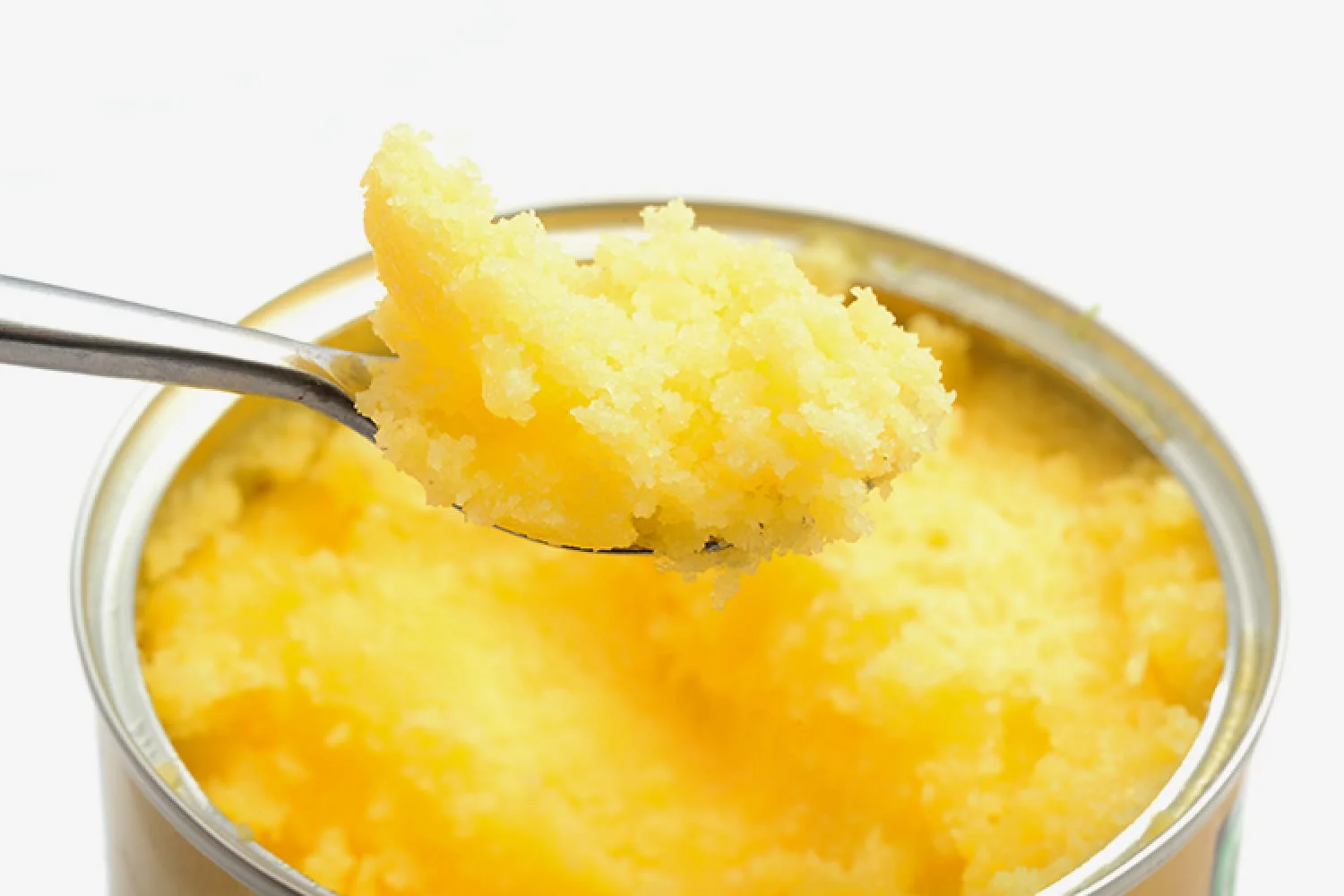
As the moisture cooks off, the milk solids settle and brown slightly, and the ghee itself rises clear and golden on top. The smell changes noticeably in the final minutes, that nutty aroma is usually the clearest sign it’s ready to come off the heat.
How We Check Each Batch?
Before any jar gets sealed, each batch is checked the same way we’d recommend a customer check it at home: how it sets once cooled, its color and texture, and its smell.
This isn’t a formal lab process, but it’s a consistent check applied to every batch, every time, and it’s the reason we’re comfortable backing every jar with a purity guarantee.
What We’re Left With?
Making real desi ghee this way is genuinely inefficient by design — it takes a large volume of milk and two full days of attention to produce a comparatively small amount of ghee.
That ratio is the entire reason genuine desi ghee costs what it does. There’s no version of this process that’s fast or cheap; if it’s cheap, something in the process was skipped.
Why We Show This?
Most ghee brands talk about “bilona method” and “wood-fire cooked” as marketing lines. We’re showing the actual process because the only way to prove ghee is what it claims to be is to show exactly how it’s made.
If you want to see what this process produces, that’s our desi ghee — same process, every batch. You can also read how to check if your ghee is pure once it arrives, or learn more about the farm and the people behind it.
— The Field n Feather Farm Team