
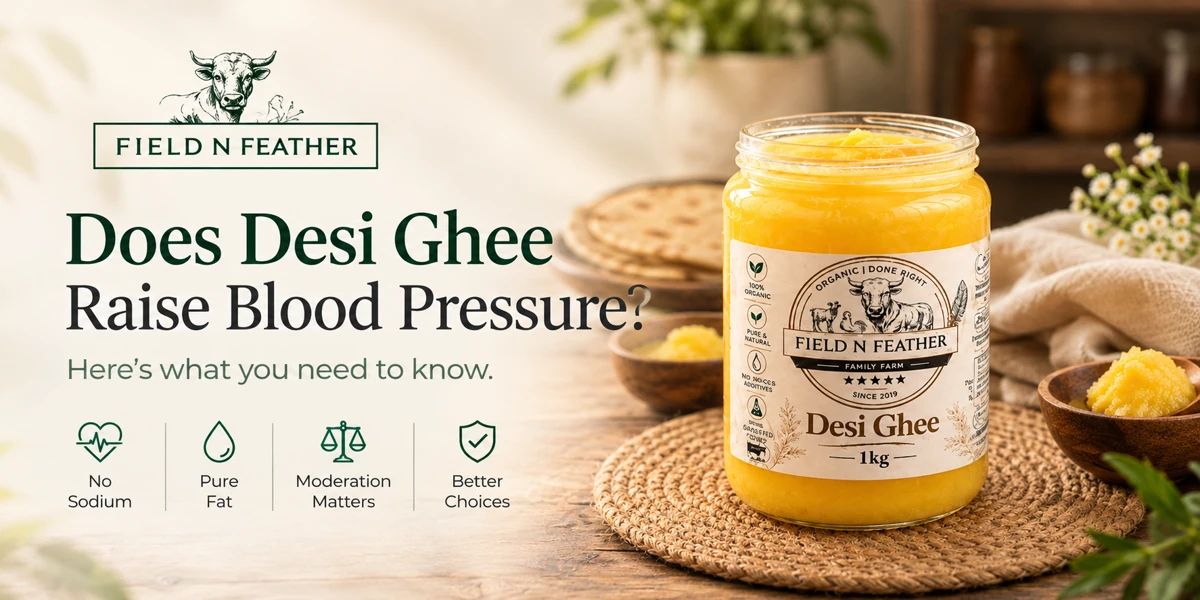
Does Desi Ghee Increase Blood Pressure?
No, not directly. Desi ghee has zero sodium, an sodium is the main dietary driver of high blood pressure. A spoon of pure desi ghee on your dal doesn’t do what a handful of pickle or packaged snacks does.
That said, “not directly” isn’t the same as “no risk at all.” Here’s the full picture.
This article is for general information. It isn’t medical advice. If you have high blood pressure or a related condition, talk to your doctor before making changes to your diet.
Why Ghee Doesn’t Raise Blood Pressure the Way Salt Does?
Blood pressure rises mainly from sodium, excess body weight, stress, low physical activity, and in some cases, genetics or existing conditions. Ghee doesn’t touch most of these directly. It’s pure fat, with no salt content at all.
Compare that to what actually spikes blood pressure in a typical Pakistani diet: pickle, papad, packaged namkeen, restaurant curries loaded with salt, and processed snacks. Ghee isn’t in that category.
The Real Risk: Calories and Saturated Fat, Not Blood Pressure Directly
Ghee is calorie-dense and high in saturated fat. Eating too much of it, day after day, can lead to weight gain and higher LDL cholesterol over time. Both of those put extra strain on your heart and blood vessels, which can affect blood pressure indirectly, especially if it’s already borderline.
This is a slow, cumulative effect from overuse. It’s not something a teaspoon of ghee triggers on its own.
What the Research Actually Shows
A study published by the National Institutes of Health looked at ghee’s effect on blood lipids and found that ghee making up to 10% of total dietary fat didn’t cause adverse changes in cholesterol levels. That lines up with what most nutrition guidance says: moderate ghee intake isn’t the problem. Large, unmonitored amounts, especially replacing healthier fats entirely, are.
How Much Desi Ghee Is Safe If You’re Watching Your Blood Pressure?
Most nutrition guidance points to around ½ to 1 teaspoon a day as a reasonable amount if blood pressure is a concern for you. Used as a flavor finish on dal, rice, or vegetables, a level teaspoon of good quality desi ghee adds taste without adding much risk.
For a broader breakdown of daily ghee intake beyond just blood pressure, see our guide on how much desi ghee per day is safe.
Best and Worst Ways to Eat Ghee If BP Is a Concern
Better choices:
- A small drizzle on dal, rice, or khichdi
- Finishing a dish with ghee instead of cooking in it
- Pairing it with low-sodium meals, not salty or fried food
Worse choices:
- Deep-frying in ghee
- Using it heavily on already salty food, like paratha with pickle or papad
- Free-pouring instead of measuring with a spoon
If you’re curious how ghee quantity plays into other foods too, our post on desi ghee paratha calories breaks down exactly how much a teaspoon or two adds up to.
FAQs
Is desi ghee good for high blood pressure?
Ghee isn’t harmful in small amounts, since it has no sodium. It’s not a treatment for high blood pressure either. Managing sodium intake, weight, and following your doctor’s advice matters far more than any single food.
What are the side effects of desi ghee?
In excess, ghee can contribute to weight gain and higher LDL cholesterol due to its saturated fat content. In moderate amounts, most healthy adults tolerate it well. People with existing heart conditions or cholesterol issues should use it cautiously and check with their doctor.
What can raise blood pressure?
Sodium is the biggest dietary factor. Beyond diet, excess weight, chronic stress, poor sleep, low physical activity, smoking, and certain medications or health conditions all play a role.
Can a low BP patient eat ghee?
Yes. Ghee doesn’t lower blood pressure either, so it’s generally fine for someone with low BP to include in normal amounts. It isn’t a treatment for low blood pressure, so don’t rely on it for that purpose.
The calorie and fat content in ghee is the same no matter which jar it comes from. What differs is purity. Ghee cut with vanaspati or palm oil brings in extra trans fats, which work against your cardiovascular health on top of whatever your blood pressure is already doing. Our guide to spotting real desi ghee covers the checks worth doing before you buy.
If you want ghee that’s just milk fat, nothing else, this is where that matters. Shop our pure desi cow ghee → — hand-churned the bilona way, from our own grass-fed cows, with zero buffalo milk and zero additives. You can read more about why the bilona method matters for purity and quality.