
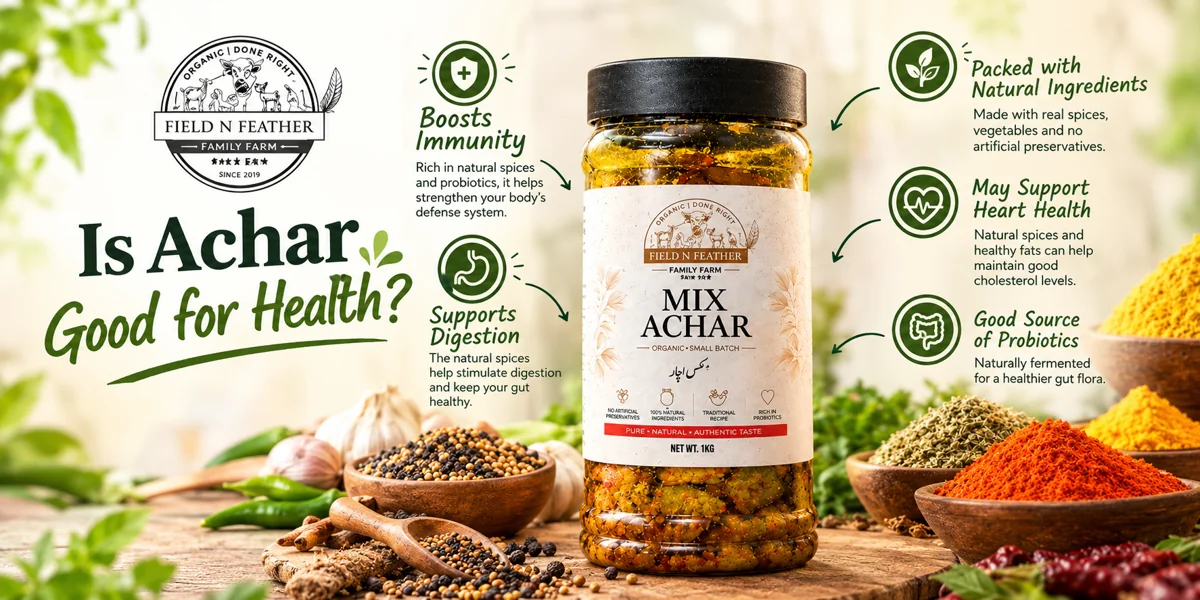
Is Achar Good for Health? Yes, in Small Portions
Yes, achar is good for health when you eat it in small portions. A spoonful adds flavor, some spices, and a few plant compounds to a meal. Problems start when you eat it by the bowl. Achar carries a lot of salt and often a lot of oil.
This guide explains what achar gives you, where it goes wrong, and how much you can eat.
What Achar Gives You
Achar is a mix of vegetables or fruit, spices, salt, and oil or vinegar. The ingredients decide the benefits.
Garlic, chili, and mustard seed add plant compounds. Lemon and mango add small amounts of vitamin C. Carrot adds beta-carotene. Spices also make plain daal and roti more enjoyable, so you enjoy simple, healthy meals.
Keep the benefits in perspective. Pickling and long storage reduce some vitamins. A spoon of achar cannot replace fresh vegetables, so treat it as a side, not a source of nutrition.
The Two Problems: Salt and Oil
Salt is the main risk. Salt preserves achar, so every jar contains plenty. One tablespoon can hold a few hundred milligrams of sodium, depending on the brand.
The World Health Organization recommends less than 5 grams of salt a day, which is about 2,000 mg of sodium. Achar, daal, roti, and salted snacks add up fast.
Oil is the second risk. Oil-based achar carries extra fat and calories. Most of the oil sits on top or pools at the bottom of the jar. Use a spoon and leave the extra oil behind.
How Many Calories Are in Achar?
It depends on the oil. Oil-based achar usually has about 20 to 45 calories per tablespoon. Vinegar-based or lightly oiled achar has fewer. Achar with added sugar or gur has more.
That is a small number for a single spoon. It becomes a big number if you eat three spoons at every meal. Check the nutrition label on your jar for exact figures.
Want Achar Without Added Chemicals?
Field n Feather Mix Achar comes in mustard oil with no added chemicals or artificial colours. Available in 250g and 500g jars, with delivery across Pakistan.
Order Mix AcharIs Achar Good for Diabetes, Blood Pressure, and Cholesterol?
Diabetes. Unsweetened achar has very few carbs. Small portions rarely affect blood sugar. Avoid sweet achar, such as gur or sugar-based mango pickle. Read the label.
Blood pressure. Salt makes achar a risk. If you have high blood pressure, limit achar to a small portion a few times a week. Your doctor can give you a daily salt target.
Cholesterol. Oil is the concern here. Use a little achar and skip the oil from the jar. If your doctor has advised a low-fat diet, follow that advice first.
Is Achar Good for Weight Loss and Digestion?
Achar can help weight loss in one way. It makes low-calorie meals taste better, so you stay on your diet. It does not burn fat. Some small studies suggest vinegar may slightly lower blood sugar spikes after meals, but the evidence is limited.
For digestion, spices such as chili and mustard can make food feel more appetizing. They can also cause acidity or burning in some people. Watch how your body responds.
Is Achar Probiotic?
Usually no. Most Pakistani achar is preserved in oil, salt, or vinegar. It is not fermented, so it does not deliver live probiotic bacteria. Sauerkraut-style fermented pickles do. Do not eat achar for gut bacteria.
Homemade vs Store-Bought Achar
Homemade achar gives you control over salt, oil, and sugar. Store-bought achar varies widely. Some brands add artificial colours, flavour enhancers, or chemical preservatives. Others keep the recipe simple.
Read the ingredient list before you buy. Choose a jar that names every ingredient and uses a real oil. Field n Feather is a family farm in Punjab, and we apply the same rule to every product: simple ingredients, listed openly, and no added chemicals. Our Mix Achar follows that rule. You can see the rest of our achar range too.
How Much Achar Should You Eat a Day?
Most healthy adults do well with one to two teaspoons per meal, or about one tablespoon a day. Eat it as a side, not a main dish.
Pair it with daal, roti, or khichri and a teaspoon of pure desi cow ghee, so the meal stays balanced. Use a clean, dry spoon and leave the extra oil in the jar. If you have blood pressure or kidney concerns, eat less and ask your doctor.
Who Should Limit Achar?
Limit achar if you have high blood pressure, kidney disease, acid reflux, or stomach ulcers. The salt and spice can make these conditions worse. Check with your doctor if you follow a low-salt diet. This article gives general information and does not replace medical advice.
Frequently Asked Questions
Is achar bad for you?
Not in small portions. Large portions add too much salt and oil.
Can I eat achar every day?
Yes, if you keep the portion to a teaspoon or two and watch your total salt for the day.
Is mango achar healthy?
Mango achar with no added sugar is fine in small amounts. Sweet mango pickle adds sugar, so eat less of it.
Is achar good for pregnancy?
Small portions are usually fine. Ask your doctor, especially if you have swelling or high blood pressure.
Which achar is the healthiest?
Choose achar with a short ingredient list, no added sugar, no artificial colours, and a moderate amount of oil.
The Bottom Line
Achar is good for health in small portions. Watch the salt, skip the extra oil, and avoid sweet varieties. Pick a jar with a clear ingredient list and eat it as a side with real meals. For more food guides, visit our blog.