
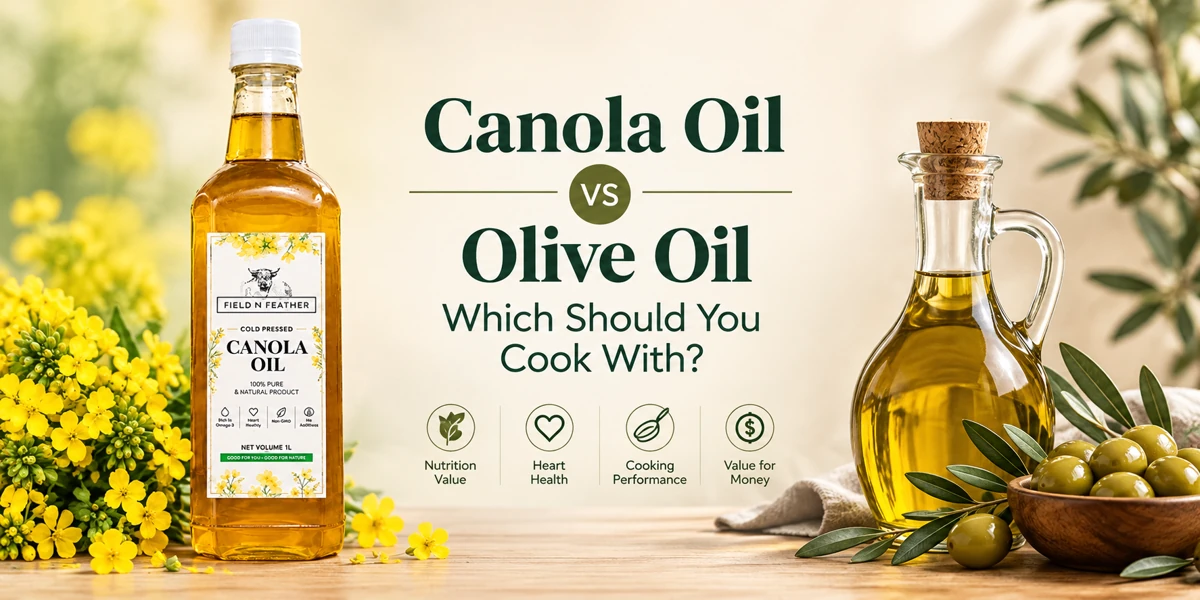
Canola Oil vs Olive Oil: Which Should You Cook With?
Canola oil handles high heat better and costs less, making it the practical choice for daily frying and cooking. Olive oil carries more antioxidants and a stronger flavor, making it better for dressings, dips, and finishing a dish.
Most kitchens genuinely benefit from having both, used for different jobs.
Here’s the full comparison, so you know exactly when to reach for which one.
This article is for general information, not medical or dietary advice. If you’re managing a specific health condition, check with your doctor about what fits your diet.
Canola Oil vs Olive Oil at a Glance
| Canola Oil | Olive Oil | |
|---|---|---|
| Smoke point | 400-450°F (204-232°C) | 375-410°F (190-210°C) |
| Flavor | Neutral | Bold, peppery, fruity |
| Best for | Frying, deep frying, baking | Dressings, dips, drizzling |
| Saturated fat | Lower | Slightly higher |
| Antioxidants | Lower | Higher |
| Price | More affordable | Generally pricier |
Smoke Point: Which One Handles High Heat Better
Canola oil has a higher smoke point than olive oil, which is why it works better for deep frying, karahi cooking, and other high-heat dishes common in Pakistani kitchens. Once an oil passes its smoke point, it starts breaking down and can affect both flavor and quality.
According to Healthline’s comparison of the two oils, canola oil’s higher smoke point makes it the more stable option for high-heat frying, while olive oil holds up better at lower, more moderate temperatures.
Flavor and Cooking Style
Canola oil has a neutral taste. It won’t change how your food tastes, which makes it a safe default for frying pakoras, samosas, or anything where you want the ingredients to speak for themselves.
Olive oil has a noticeably stronger flavor, especially extra virgin varieties. That’s exactly why it works well drizzled over salads, used in dips like hummus, or finished on top of a cooked dish, where its taste actually adds something.
Nutrition Compared
Both oils are considered heart-healthy fats. Olive oil, particularly extra virgin, carries more antioxidants and polyphenols, compounds linked to reduced inflammation.
Canola oil is lower in saturated fat and brings a solid amount of Omega-3 fatty acids and Vitamin E, along with phytosterols that help reduce cholesterol absorption in the body.
Neither oil is “bad.” They simply bring different strengths to the table.
Price and Practicality for Everyday Cooking
Canola cooking oil is generally more affordable, which matters if you’re cooking daily rather than using oil occasionally for finishing touches. Olive oil, especially extra virgin, costs more, largely due to how it’s produced and the quality standards involved.
For a household frying and cooking most meals at home, canola oil is the more practical everyday choice on cost alone.
Our Take: Which Should You Actually Use?
If you’re cooking Pakistani food daily, karahi, fried snacks, baked goods, reach for canola oil. Its higher smoke point and neutral flavor make it the more practical everyday option, and it costs less over time.
Keep olive oil on hand for salads, dips, or drizzling over a finished dish where its flavor can actually shine.
We sell both ghee and cooking oil, so we’re not picking a side out of loyalty to one product. Canola oil simply makes more sense for daily frying, and that’s the honest answer.
FAQs
Is canola oil or olive oil better for cooking?
It depends on the job. Canola oil is better for high-heat cooking and frying. Olive oil is better for dressings, dips, and dishes where its flavor stands out.
Which oil has a higher smoke point, canola or olive oil?
Canola oil has a higher smoke point, around 400-450°F, compared to olive oil’s 375-410°F, making canola more stable for deep frying.
Is canola oil healthier than olive oil?
Olive oil generally has more antioxidants and polyphenols. Canola oil is lower in saturated fat and higher in Omega-3s. Both are considered heart-healthy in moderation.
Can you use canola oil for frying?
Yes. Its high smoke point and neutral flavor make it one of the better oils for frying and deep frying.
Which oil is cheaper, canola or olive oil?
Canola oil is typically more affordable than olive oil, especially compared to extra virgin varieties.
If daily frying and cooking is what you need an oil for, Canola Cooking Oil from us is cold-pressed, cholesterol-free, and certified, made the same way we’ve always made our desi ghee: nothing blended in, nothing hidden.
See our full range of pure food products on the Field n Feather homepage.